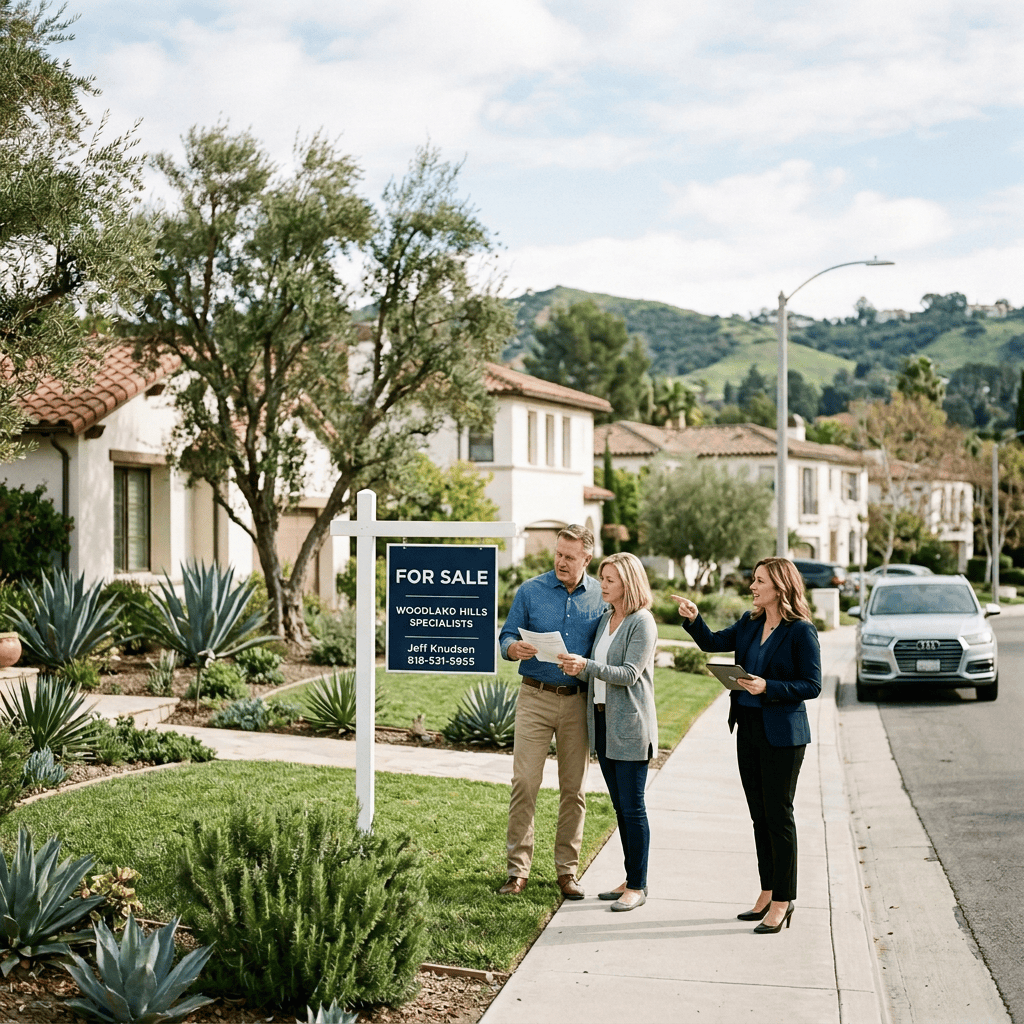
Is Now a Good Time to Sell in Woodland Hills?
If you own a home in Woodland Hills, you may be wondering whether 2026 is still a favorable time to sell. The short answer: it can be a good time, but success is no longer automatic. After several years of a frenzied seller’s market, conditions have shifted toward a more balanced environment where strategy, pricing, and presentation matter more than ever.
Recent data from sources such as Redfin, Zillow, PropertyShark, and Realtor.com show that prices are holding at relatively strong levels, but buyers now have more options and more time to make decisions. For Woodland Hills homeowners, this means that thoughtful planning can still produce strong outcomes, even if the market is not as overheated as it was in 2021.
Current Market Conditions for Woodland Hills Sellers
As of late summer and early fall 2026, median home prices in Woodland Hills are generally holding in the $1.2–$1.3 million range, according to Q2 2026 reports from Redfin, Zillow, and PropertyShark. That level represents a meaningful gain over pre-2020 pricing, even though the pace of appreciation has cooled.
The most notable shift is in market dynamics rather than in headline prices. Inventory has increased from the extreme lows seen during the pandemic years, giving buyers more choices. Days on market have lengthened compared with the sub-two-week timelines that became common in 2021. Realtor.com now characterizes Woodland Hills as a “balanced” market as of August 2026, rather than a clear seller’s market.
At the same time, prices have not collapsed. The latest Sotheby’s Q2 2026 market update points to some softening in supply metrics, but finds that prices remain supported. Year-over-year price growth is modest, and in some segments nearly flat, but overall values are still elevated by historical standards. For sellers, this combination means that while bidding wars are less common, it is still possible to achieve strong prices when a home is well positioned.
What Makes a Home Sell Well in Today’s Woodland Hills Market?
In a more balanced market, buyers become more selective. Homes that sell quickly and at favorable prices in Woodland Hills now tend to share a few key characteristics.
1. Data-driven pricing strategy. With price growth cooling, setting the right list price is crucial. Overpricing can cause a property to sit on the market, leading to price reductions and diminished leverage. Underpricing, on the other hand, no longer guarantees a bidding war. A successful strategy is grounded in recent, hyper-local comparable sales, current inventory, and an understanding of how your home’s features—lot size, school zone, upgrades, and location within Woodland Hills—stack up against competing listings.
2. Condition and move-in readiness. Well-priced, move-in-ready homes in desirable pockets of Woodland Hills are still performing well. Buyers are responding to properties that feel turnkey: updated kitchens and baths, fresh paint, well-maintained systems, and clean inspection reports. Smaller improvements, such as fixing deferred maintenance and addressing obvious cosmetic issues, can help a home stand out without requiring a full renovation.
3. Professional presentation and marketing. As days on market lengthen, first impressions matter. High-quality photography, thoughtful staging, clear floor plans, and accurate, detailed descriptions help attract serious buyers. In a neighborhood as diverse as Woodland Hills—ranging from mid-century ranch homes to newer construction—effective marketing should highlight what is specific to your property and its micro-location, from canyon views to proximity to schools, parks, and commuter routes.
Is There a Better or Worse Time to Sell in 2026?
Seasonality still plays a role in Woodland Hills real estate, but it is only one factor. Historically, late spring through early summer tends to see more buyer activity, especially for families aiming to move between school years. However, in a balanced market, the quality of your individual listing—pricing, condition, and how it compares to available alternatives—often matters more than the specific month you list.
In 2026, the decision of when to sell should also consider broader economic indicators such as mortgage rates and local employment trends. If rates move higher, some buyers may be priced out, but lower inventory later in the year could offset that by reducing competition from other listings. Conversely, if rates ease, more buyers may enter the market, but you could also face more competing homes for sale.
For many Woodland Hills homeowners, the more practical question is whether your personal timeline aligns with current conditions. If you have flexibility, preparing your home thoroughly and timing your listing to coincide with periods of active buyer traffic can help. If you need to move on a set schedule, focusing on accurate pricing and strong presentation becomes even more important than trying to “time the market.”
Making an Informed Decision About Selling
Today’s Woodland Hills market rewards informed, data-driven decisions. While the days of near-automatic multiple offers may have passed, median prices remain relatively strong, and well-prepared homes continue to sell successfully. The key is to understand how your specific property fits into current conditions and to craft a strategy around that reality.
If you are considering a sale in 2026, a detailed review of recent neighborhood data, buyer demand in your price range, and the condition of your home can help determine whether now is the right moment—or whether a few targeted improvements or a slight adjustment in timing could improve your results.
 Selling Woodland HIlls
Leave a comment