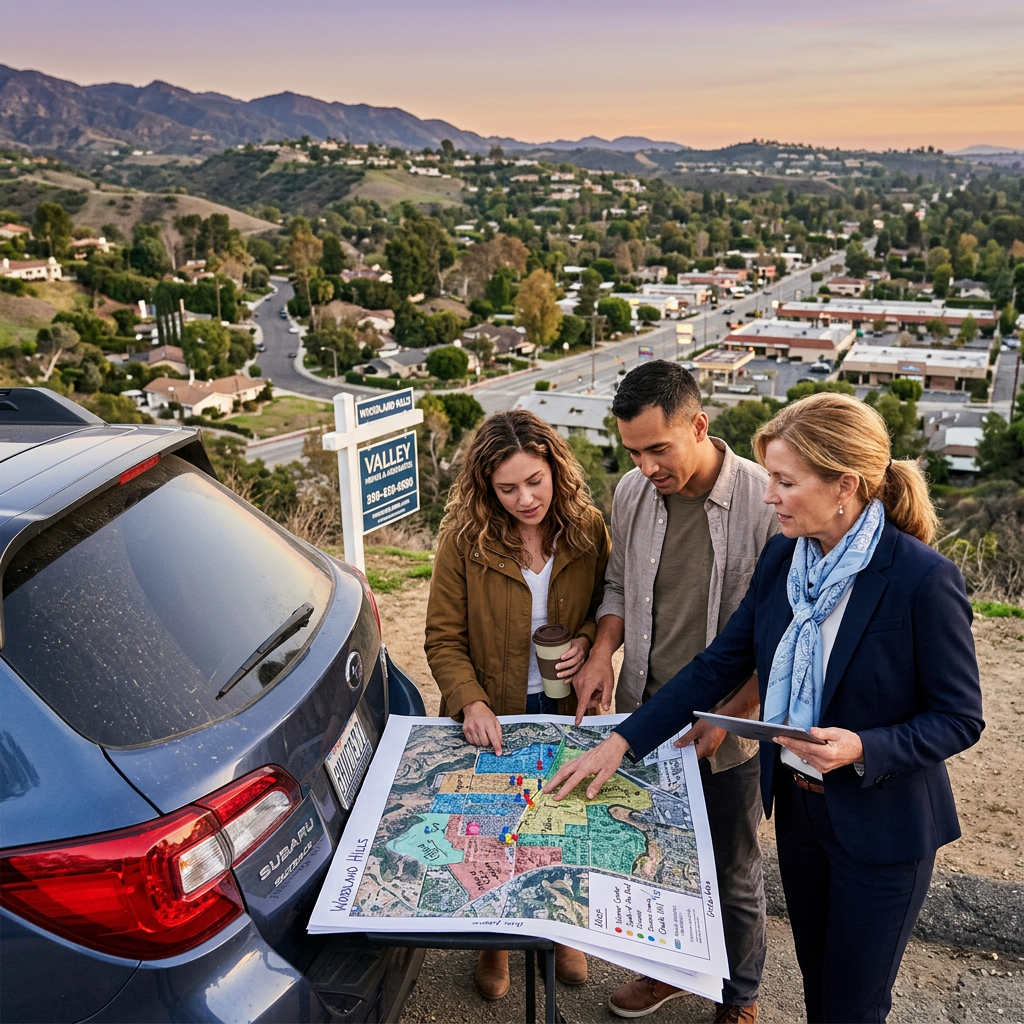
Which Part of Woodland Hills Is Right for You?
Woodland Hills is not a single, uniform neighborhood. It is a patchwork of distinct pockets, each with its own rhythm, housing stock, and lifestyle appeal. Whether you are a longtime resident weighing a move, a prospective buyer comparing areas, a seller trying to position a listing, or an investor scouting opportunity, understanding these differences matters. Below is a practical comparison of several recognizable areas within Woodland Hills to help you think through what fits your priorities.
Warner Center and the Westfield Topanga Area
The area surrounding Warner Center and Westfield Topanga has evolved into one of the more urban, amenity-dense corners of Woodland Hills. Housing here increasingly skews toward condominiums, townhomes, and newer mixed-use developments rather than traditional single-family lots. Residents tend to value walkability to shopping, dining, and entertainment, along with a more contemporary, low-maintenance lifestyle.
This part of Woodland Hills also functions as something of a business hub, with office space and corporate activity nearby. That makes it a natural fit for professionals who want a short commute to work, renters and buyers who prioritize convenience over yard space, and investors interested in rental demand tied to employment centers. The tradeoff is generally less privacy and more density compared to residential neighborhoods farther from the commercial core.
South of the Boulevard
South of Ventura Boulevard, the terrain rises into the hills, and the housing character shifts noticeably. Here you will find larger single-family homes, more varied architecture, and lots that often back up to hillside or canyon views. Streets tend to be quieter, with a greater sense of separation from the commercial bustle below the Boulevard.
This area tends to appeal to buyers seeking more space, privacy, and a semi-rural feel while still being minutes from shopping and services. Commute considerations are worth noting, since some streets wind and climb, which can add a few minutes compared to flatter routes. For sellers, homes in this area often attract buyers specifically looking for character and view potential, so highlighting those features can be worthwhile.
Neighborhoods Around Woodland Hills Country Club
The residential streets that wrap around Woodland Hills Country Club have a distinct identity built around golf course frontage, mature landscaping, and a sense of established calm. Homes in this pocket are frequently larger, with layouts and lot sizes that reflect an earlier era of development, and many properties offer direct or near views of the course.
This setting tends to suit buyers who value prestige, tranquility, and a slower pace without leaving the broader Woodland Hills area. It is also a draw for those with an interest in golf or club membership as part of their lifestyle. Because much of this area is primarily residential, daily conveniences like grocery stores and restaurants typically require a short drive rather than a walk, which is a consideration for buyers who prioritize walkability.
Family-Oriented Residential Areas
Beyond these more distinct pockets, Woodland Hills has a number of residential neighborhoods built around classic single-family homes on tree-lined streets. These areas tend to prioritize practical family living: reasonably sized yards, proximity to parks, and a layout that favors cul-de-sacs and quieter through streets over major thoroughfares.
These neighborhoods often appeal to growing families and buyers who want a stable, community-oriented setting without the density of the Warner Center area or the hillside terrain to the south. Commutes vary by exact location, but many of these streets offer relatively straightforward access to major roads, making them a reasonable middle ground for households balancing work travel with a desire for residential calm.
Weighing Lifestyle, Convenience, and Commute
Each of these areas represents a different balance of tradeoffs. Density and walkability near Warner Center come at the expense of privacy and quiet. Space and views south of the Boulevard may come with longer or more winding commutes. The country club neighborhoods offer prestige and tranquility but less day-to-day walkability. Family-oriented residential pockets tend to offer a practical middle ground, though with less of the signature character found in the more distinct pockets.
For buyers and sellers alike, understanding these distinctions can inform both search strategy and pricing conversations. For investors, recognizing which areas attract renters seeking convenience versus buyers seeking space can help clarify which properties align with a given strategy.
Finding the Right Fit
There is no single best part of Woodland Hills, only the part that best matches your priorities. If convenience and a dynamic environment matter most, the Warner Center area may be worth a closer look. If space and views are the priority, the hillside streets south of the Boulevard deserve attention. If a quieter, established setting with golf course scenery appeals to you, the neighborhoods around the country club are worth exploring. And if family-friendly practicality is the goal, the broader residential pockets may be the most comfortable fit.
As with any real estate decision, it is worth taking time to walk these neighborhoods, consider your daily routine and commute, and reflect honestly on what matters most to you before deciding where to plant roots in Woodland Hills.


Leave a Reply